Why Sundance Films Matter
Why Sundance Films Matter
Posted On: Saturday, January 30, 2010
http://www.youtube.com/watch?v=4KRD8e20fBo
Jim Clark, founder of Netscape, is an example of social responsibility at its most effective in his financial backing of a 2009 award-winning Sundance Film Festival movie, “The Cove,”
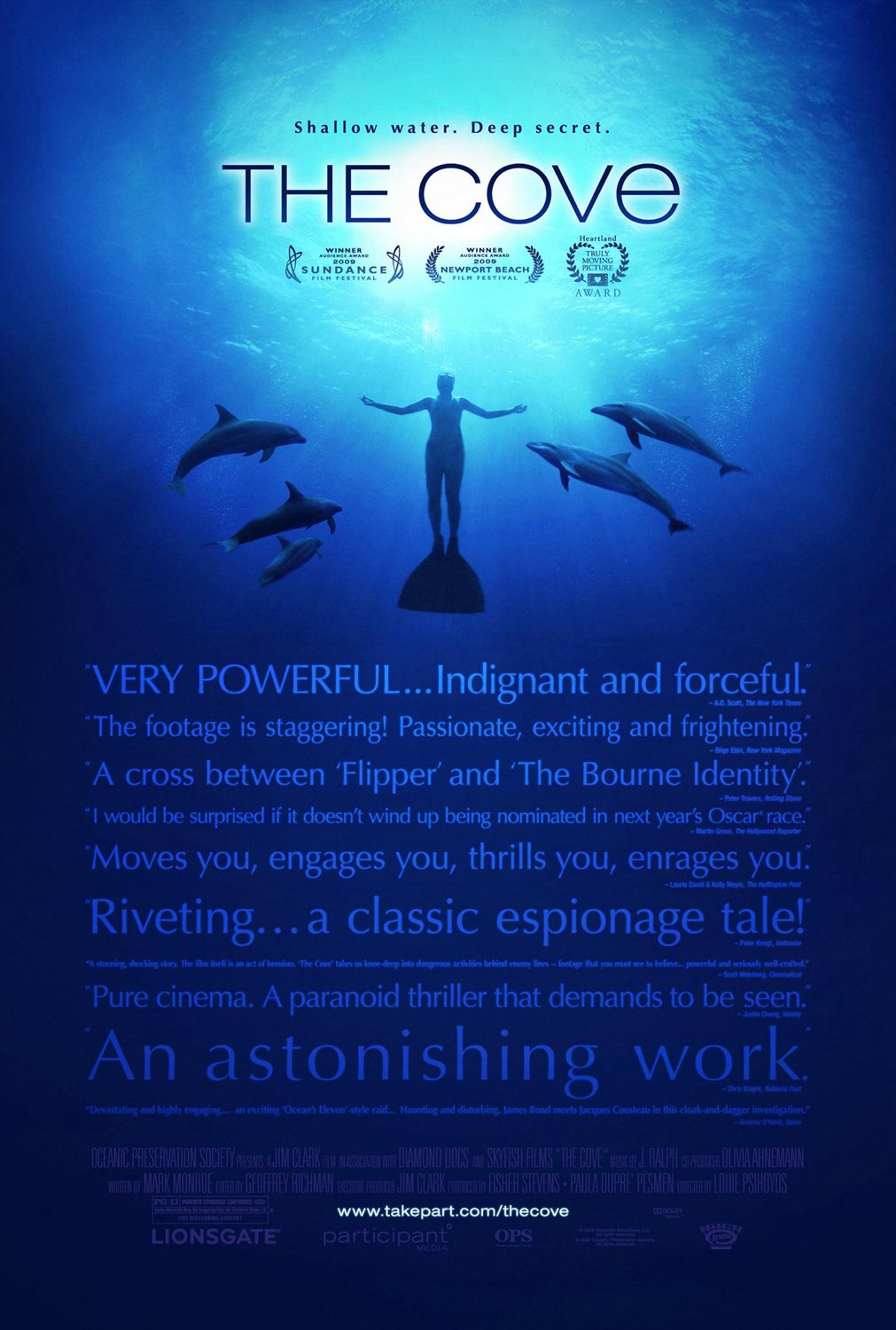
Movie poster for “The Cove”
shown in theatres last summer and released in DVD last month. The film about the secret annual slaughter of 23,000 dolphins in Taiji, Japan created an international outcry that resulted in the town of Taiji suspending the slaughter of dolphins last fall through March 2010, the traditional hunting season. Instead, captured dolphins not sold to aquariums (at $150,000 apiece), will be released and not slaughtered in this temporary moratorium.
“The Cove,” a $2.5 million film captured the secret, systematic annual killing of dolphins in a cove out of sight of onlookers by Taiji fisherman who traditionally have sold the meat – high in mercury contamination — for $600 a dead dolphin. The catalyst for the film was Ric O’Barry, a marine mammal specialist who was the trainer for dolphins in the “Flipper” TV series in the 1960s. O’Barry says in the film that when you become conscious of dolphins’ intelligence you realize they don’t belong in captivity and their slaughter is an atrocity, senseless murder.
O’Barry and National Geographic photographer Louie Psihoyos who directed “The Cove” were fearless in exposing the slaughter of dolphins as well as the Taiji fishermen’s surreptitious passing off dolphin meat as other fish to avoid red flags about mercury poisoning.
The film also discusses the human-like qualities of dolphins and the immorality of putting them in captivity. For those wanting to know more about the ethical treatment of dolphins and their advanced cognitive and emotional capabilities, read Thomas White’s In Defense of Dolphins: The New Moral Frontier.
The fight to save dolphins from slaughter has won a temporary victory, but Save Japan Dolphins is an organization O’Barry founded to stop the killing permanently.
The Japanese government has been working aggressively to overturn the International Whaling Commission’s ban on killing whales and has not addressed the slaughter of the dolphins or the danger of mercury poison in the dolphin meat being passed off as other fish. “The Cove” refocuses world attention on ethical questions involved in Japan’s control of the world marketplace in fish. Japan has shown a disturbing lack of ethical leadership in these issues.
And again, this year, independent films entered in the Sundance Film Festival take on themes that call attention to corruption (“Casino Jack and the United States of Money” about Jack Abramoff), the complexities of the abortion debate (“12th & Delaware”), pollution (“Gasland”), public education problems (“Waiting for Superman”) and human trauma and how it is faced, to name a few. “Howl” recounts the obscenity trial for Allen Ginsburg’s poem of the same name and what the first amendment means to American culture and counterculture.
Sundance is about ideas, about challenging what is to ask what could be. Its films are about frailties and courage, about ignorance and awareness, about unintended consequences, good and evil….the stuff of life and in the imagination of the filmmaker, a mirror of choices that define the road taken.

Gael O’Brien is a catalyst for leaders leading with purpose and impact. She is an executive coach with a corporate and public affairs background. Gael is President of Strategic Opportunities Group.
Posts by Category
Archive
Most Recent
We recently had Gael O’Brien speak to us at the Network of Enterprising Women and she gave an outstanding talk on ethics in the workplace and how we might meet it head on. I highly recommend listening to her or inviting her to speak at your venue.